
 EN
EN
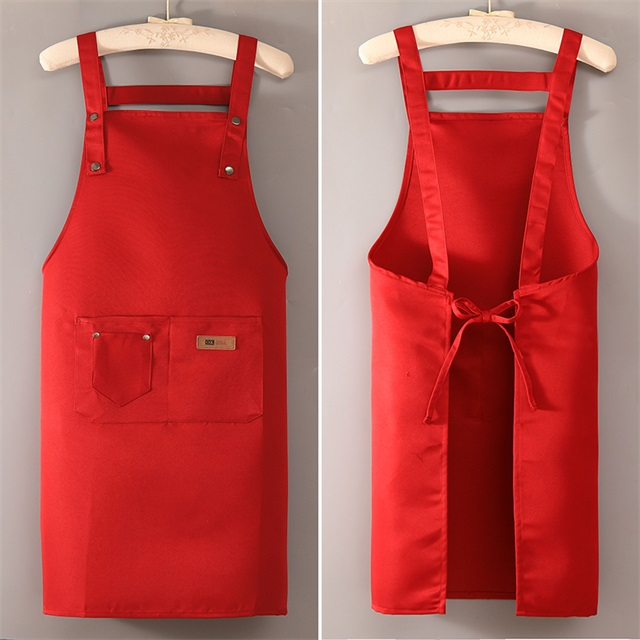
Smart Pocket Design for Front-of-House Efficiency Optimized Pocket Layout: Holding Order Pads, Pens, Wine Keys, and Mobile Devices
Different pocket designs allow for enhanced service and efficiency. Good aprons have the pocket design that makes it easy to pull out pens. Angled pockets allow for almost instantaneous access to wine keys to open a bottle. Deeper pockets can accommodate phones, such as smartphones that are needed for accepting digital payments, and still, keep the apron from being bulky. Pockets that are designed to stick out a little allow for Front-of-House staff to one hand grab the note, and for what it is worth, that is a huge difference when tray balancing at the same time. Research from Hospitality Workflow Institute in 2023, within industry busy service periods, this type of design resulted in service step reduction of 30%. The essence of this design is to place all the service tools at arms reach in customer contact zones. Mid thigh pockets allow for perfect body alignment while pivoting for writing and reduce the unsightly bending.
Separate Storage for Tip and Receipt Cash, Notes, Tools, and Services.
Tip cash separation-streamlines cash handling and cash security, and protects cash cleanliness. Cash spill incident protection will keep cash from getting sticky. Protection from cash theft is provided via zippered pockets. Features include:
: Slip pockets to keep notes straight and avoid paper jams
: Loops for tools to keep bottle openers in easy touch access
: Sleeves to keep devices heated and to retain their use near hot ovens
Each layer is designed to trap and keep receipts away from everything else in the bag, quite the sanitary protection. Proven friction stitching will hold strong through months of use, bottomless pits will retain full function, and the bag will carry corkscrews and coins to its heart's content. Every piece of the bag is made from its gospel material; phone pockets breathe; knife pockets will wipe clean. Organizing systems changed to ensure bags functioned, and restaurant operations optimized. Staff interface fully with system, letting them to dig and retrieve quickly, while the restaurant worked to rapidly turn tables. This was a massive improvement over the previous bags.
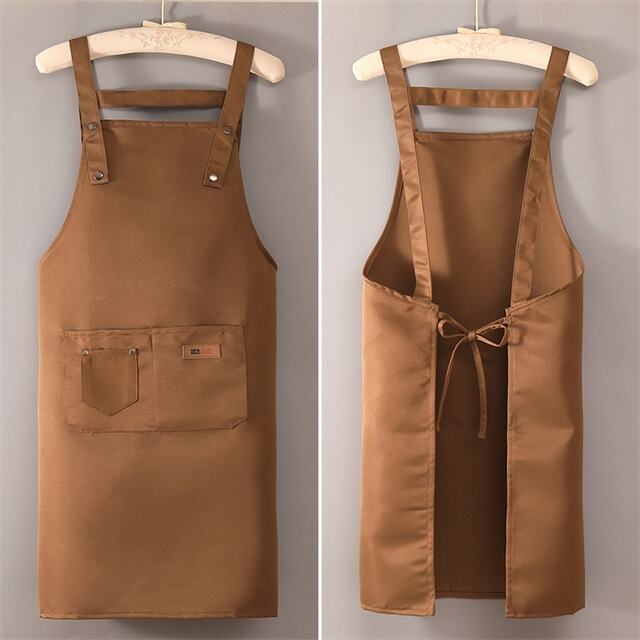
Mobility-Focused Waist Apron Fit for High-Pace Service
Ergonomic Waist-Down Silhouette Enhances Table Navigation and Posture
Good waiter aprons let staff move freely through busy restaurants without getting stuck. The design usually tapers down at the waist area so there's no extra fabric hanging around the thighs. This makes it easier for servers to weave between tables packed close together without knocking over chairs or accidentally bumping into customers. Keeping things streamlined helps maintain proper posture throughout long shifts too. According to recent stats from the Bureau of Labor Statistics, about six out of ten people working in hospitality suffer from back problems. When weight is properly distributed across the hips instead of sitting on the shoulders, it takes pressure off the spine during all those constant bends and stretches needed when taking orders or clearing plates.
Cross-Back vs. Traditional Straps: Impact on Range of Motion and Fatigue Reduction
Strap Type Range of Motion Improvement Fatigue Reduction Benefit
Traditional Waist Limited shoulder rotation Higher upper-back strain
Cross-Back Design 360° arm mobility 40% less shoulder tension
Cross-back straps allow for better distribution of pressure on the back and prevents pressure accumulating on the lower back as happens on the old style waist straps. Their design stays still even if a person needs to swing to one side quickly. According to a study published last year in Hospitality Ergonomics Journal, staff wearing these for an entire day reported a reduction in muscle fatigue of about 40 percent. Restaurant employees appreciate the ability to reach for items on high shelves, and to pour wines, without the need to adjust their straps. Everything seems to flow instead of being obstructed.
Materials for Waiter Aprons: Durable, Comfortable, and Hygienic
Waterproof Nylon and Poly-Cotton Blends: Comparing Breathability, Spill Management, and Stain Resistance
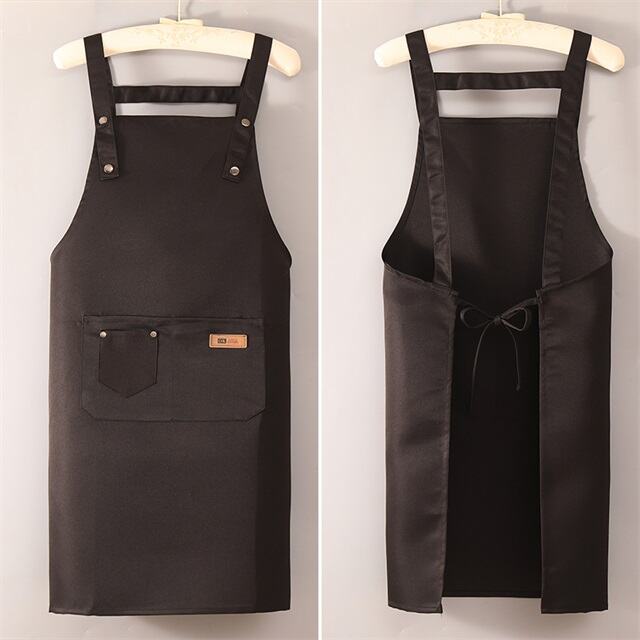
The type of fabric used to make an apron can make waiters' jobs a lot easier or a lot more difficult. While many poly-cotton blended aprons are on the market, the best option is a blend that contains 65% polyester and 35% cotton. This is a balanced blend as the level of airflow is roughly 60 to 70% and the worker is able to cool down. Because of the poor stain removing abilities of the poly-cotton blend when spilled on, these waiter's aprons are best suited for environments where the temperature can be hot as in the case of professional kitchen aprons. In contrast, fully waterproof nylon aprons handle spills better as the liquid tends to roll of the material instead of getting absorbed. The latest studies done by the Hospitality Textile Research Consortium have shown that, in kitchen environments, the biggest part of bacterial growth is inhibited by nylon as opposed to other fabric types by about 40% and this is why waterproof nylon waiter aprons are the best.
Features Poly-Cotton Blend Waterproof Nylon
Stain resistance Moderate (needs treatment) High (inherent property)
Breathability High (moisture-wicking) Low (traps heat)
Spill recovery Slow absorption (5-8 sec) Instant beading (1-2 sec)
Choosing workwear for front of house staff depends on what each role needs. Some employees require more breathable fabrics for comfort during long shifts, while others require more protective fabrics in areas where drinks are constantly spilling. Nylon has a non-porous surface, which helps keep everything clean and sanitary, however, staff sweating around hot kitchen areas has increased by a documented 30% while wearing it. It would be a good idea for restaurants to consider differentiating functional fabrics for specific work roles. For example, bartenders and baristas would benefit most from nylon pieces to protect against splashes and spills, whereas front-of-house staff who are table-hopping and who need to be mobile would be more comfortable in a poly-cotton blend.
Not Having to Adjust and Refit During Service
Waiter's fit is crucial to how eles material and two more imperatives drive their performance in the frenetic environment and perseverance. These include how esp aprons are designed and how esp aprons and elongated esp easily absorb unavoidable spills. An apron that is poorly fitted and doesn't stay in place will frustrate anyone who is moonlighting at the restaurant. Convenience. Good aprons impact spouses who are being exploited. Having to adjust the apron waist band is a constant nuisance. Cotton blends are not the best material choice for aprons due to the good stretch. An apron designed with flexible elastic panels is the best choice for waiters. Good material choice for aprons. Good waist band adjustable elastic Placed properly elastic panels help wearers distribute the spon occur waist bander and elongation sponation. Max Spon elastic rider used when. waist bander poles. Good material choice for aprons. Good waist band adjustable elastic Placed properly elastic panels help wearers distribute the spon occur waist bander and elongation sponation. Max Spon elastic rider used when.
Common Enquiries
What is the primary benefit of having smart pocket designs on waiter aprons?
More pocket space means more room for plug ins, order pads, pens, wine keys, or anything else the wait staff like to keep on hand, and that means shorter interaction times and fewer service steps, while also increasing engagement with the customers.
What does cross-back strap design aprons mean for staff at the restaurant?
It means that restaurant staff have less fatigue and greater mobility with the apron, as the design means that the weight is distributed across the core, reducing the tension in the shoulders by up to 40 percent, which is great for the long shifts that are common in the industry.
What apron material is the best for dealing with spills?
When dealing with spills, nothing beats waterproof nylon. It allows liquid to just slide right off, while with poly-cotton blends, those spills are just absorbed. That means they need additional treatment in order to deal with them at all.