
 EN
EN
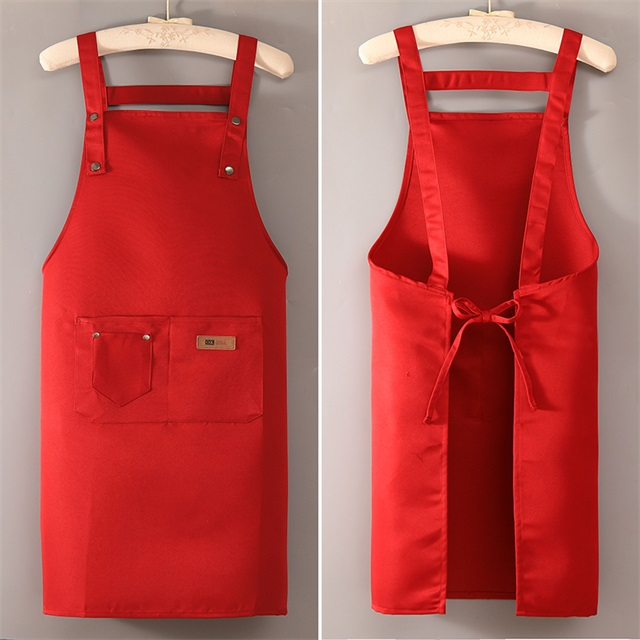
Natural-Fiber Waterproof Apron Materials: Waxed Canvas and Coated Cotton Twill
How wax impregnation delivers reversible water resistance—and why it diminishes with wear and washing
Wax impregnation creates water resistance by physically filling the pores between cotton fibers with hydrophobic wax molecules—typically paraffin, beeswax, or blends—rather than forming a permanent chemical bond. This reversible barrier explains its gradual loss over time: each laundering cycle removes approximately 15% of the wax layer, reducing hydrostatic resistance significantly after 10 washes. Commercial kitchens, where aprons undergo frequent cleaning, face notable durability challenges with waxed canvas. Unlike permanently coated fabrics, waxed canvas requires seasonal rewaxing to restore performance—a practical maintenance step that adds long-term operational cost but preserves the material’s biodegradability and low environmental impact.
Coated cotton twill: Breathability, abrasion resistance, and re-treatment requirements for commercial waterproof apron use
Coated cotton twill offers a functional compromise between water resistance and breathability—valuable in hot, high-heat kitchen environments where fully synthetic aprons cause discomfort. Its tight plain weave provides inherent abrasion resistance, while thin, flexible coatings—such as polyurethane (PU) or plant-based durable water repellent (DWR)—add targeted waterproofing without fully encapsulating the fabric. However, repeated contact with counter edges accelerates coating wear by 40% compared to general use, according to textile durability studies published by the American Association of Textile Chemists and Colorists (AATCC). Unlike waxed canvas, recoating cannot be done in-house and requires professional application—but initial treatment lasts 50% longer than wax finishes under continuous moisture exposure. For commercial users, this translates to higher upfront investment offset by reduced re-treatment frequency and more consistent protection.
Synthetic-Barrier Waterproof Apron Materials: PVC, Rubber, and Plastic-Coated Fabrics
PVC waterproof apron materials: High hydrostatic head vs. UV/heat-induced embrittlement and cracking
PVC-coated fabrics deliver exceptional initial water resistance thanks to their dense, impermeable barrier—achieving hydrostatic heads exceeding 10,000 mm in thick, high-quality formulations. This makes them ideal for heavy-duty applications like commercial dishwashing, chemical handling, or wet-processing stations. Yet their long-term reliability is compromised by two key vulnerabilities: UV exposure and elevated temperatures. Prolonged sunlight or heat from steam, ovens, or drying cycles triggers plasticizer migration, leading to embrittlement, micro-cracking, and eventual coating failure. Additionally, PVC offers zero breathability—trapping heat and sweat against the skin during extended wear. While highly effective for indoor, low-heat settings, PVC is less suitable for outdoor use or proximity to high-temperature equipment; alternatives with better thermal stability should be prioritized in those contexts.
Rubber and plastic-coated nylon or cotton waterproof aprons: Real-world longevity in high-moisture, high-abrasion kitchen environments
Rubber-coated and plastic-coated fabrics offer distinct trade-offs in flexibility, resilience, and service life. Natural rubber provides excellent elasticity and conformal moisture sealing but degrades rapidly when exposed to kitchen oils, greases, and repeated flexing—often developing pinhole leaks or surface tackiness within six to twelve months of daily use. In contrast, plastic-coated nylon—commonly using polyurethane (PU) or polyethylene (PE)—delivers superior abrasion resistance and retains barrier integrity through frequent washing and thermal cycling. Cotton substrates with plastic coatings provide moderate breathability and a softer hand, though creasing or folding can initiate delamination at stress points. For demanding, high-moisture, high-abrasion environments, reinforced nylon bases with thick, cross-linked plastic coatings consistently outperform rubber. With proper care—including hang-drying and avoiding sharp folds—a quality plastic-coated nylon apron can maintain reliable waterproofing for up to two years in active commercial kitchens.
Advanced-Treatment Waterproof Apron Materials: Teflon, Metallized Films, and Laminated Layers
Teflon-coated waterproof apron fabrics: Surface energy control, stain resistance, and long-term delamination risks
Teflon-coated fabrics rely on ultra-low surface energy to repel water, oils, and stains—causing liquids to bead and roll off rather than absorb. This molecular-level repellency eliminates the need for additional chemical treatments and provides immediate, high-performance protection. However, real-world durability is limited by mechanical stress: repeated bending, stretching, and thermal cycling in kitchen environments strain the bond between the fluoropolymer coating and base fabric. Industry assessments—including long-term field testing by the International Fabric Institute—indicate that visible delamination typically begins after 6–12 months of daily use in high-temperature settings. While Teflon excels in initial repellency and ease of cleaning, its functional lifespan hinges on manufacturing precision (e.g., plasma pretreatment for adhesion) and user care—avoiding abrasive scrubbing or high-heat drying that accelerate polymer fatigue. Eventually, microscopic cracks form in the coating layer, necessitating replacement or professional reapplication.
Key Factors That Determine Long-Term Water Resistance in a Waterproof Apron
Fabric base (filament vs. spun polyester), coating adhesion quality, and environmental stressors (heat, chemicals, flexing)
The longevity of a waterproof apron begins with its foundation: the fabric base. Filament polyester—made from continuous, smooth synthetic fibers—resists wicking, minimizes dirt retention, and supports stronger coating adhesion compared to spun polyester, which uses shorter, crimped fibers prone to moisture absorption and fiber shedding. Equally critical is coating adhesion quality: even the most advanced polymer coating fails prematurely if poorly bonded to the substrate. Cross-linked PU or chemically grafted PVC layers withstand repeated flexing and washing far better than solvent-bonded alternatives. Finally, environmental stressors directly dictate service life—high heat softens coatings, caustic cleaners degrade polymer chains, and constant flexing initiates micro-cracks at seam lines and fold points. Selecting a high-denier filament base paired with a chemically stabilized, cross-linked coating significantly extends performance in commercial kitchens and industrial settings—where durability isn’t optional, it’s operational necessity.
FAQ
What makes waxed canvas a sustainable option for waterproof aprons?
Waxed canvas is biodegradable, made from natural fibers, and can be rewaxed to restore performance, reducing waste over time and having a low environmental footprint.
How does waxed canvas compare to coated cotton twill in commercial kitchens?
Waxed canvas requires regular maintenance like rewaxing, while coated cotton twill lasts longer without re-treatment and provides better breathability in hot environments.
Why isn't PVC suitable for high-temperature environments?
PVC coatings can embrittle and crack when exposed to high heat or prolonged UV exposure, making them less durable in such conditions.
What are the advantages of Teflon-coated aprons?
Teflon-coated aprons provide excellent water and stain repellency, but they may delaminate over time with repeated mechanical stress or heat exposure.
How do reinforced nylon bases enhance the durability of plastic-coated aprons?
Reinforced nylon bases provide superior abrasion resistance and maintain coating integrity through frequent washing and thermal cycling, making them ideal for demanding environments.
Table of Contents
- Natural-Fiber Waterproof Apron Materials: Waxed Canvas and Coated Cotton Twill
- Synthetic-Barrier Waterproof Apron Materials: PVC, Rubber, and Plastic-Coated Fabrics
- Advanced-Treatment Waterproof Apron Materials: Teflon, Metallized Films, and Laminated Layers
- Key Factors That Determine Long-Term Water Resistance in a Waterproof Apron
-
FAQ
- What makes waxed canvas a sustainable option for waterproof aprons?
- How does waxed canvas compare to coated cotton twill in commercial kitchens?
- Why isn't PVC suitable for high-temperature environments?
- What are the advantages of Teflon-coated aprons?
- How do reinforced nylon bases enhance the durability of plastic-coated aprons?